Beatslayer – Game design document
“You’d better be prepared. Because when the going gets tough, ya gotta do what you can. Don’t even think about leaving. I’ll know.”
Overview
Beatslayer is a 2D action game based around rhythmic and satisfying combat inspired by several iconic franchises, such as; Sekiro/Souls, Yakuza and Rhythm Heaven. Between these influences and the original ideas on display, Beatslayer is a unique blend of originality while also being familiar enough for skilled players to hop into.
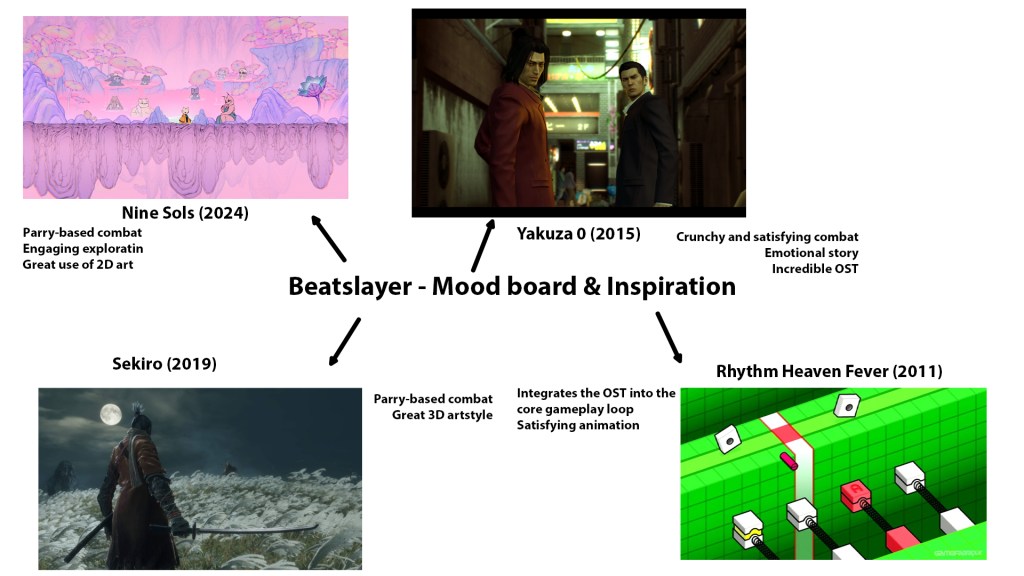
Above is a mood board for Beatslayer. It includes a few games that Beatslayer is inspired by and some of their standout features.
Beatslayer isn’t for the weak-hearted. It will put the players skills to the test. Harnessing the power of different fighting styles, the player will punch, hack, slash and shoot their way through a variety of different worlds and levels. That is, if they have the guts.
Beatslayer is going to innovate in a number of key areas:
Feedback: Beatslayer gives a strong sense of feedback to the player, letting them know when they mess up or if they do well via visual and audio cues.
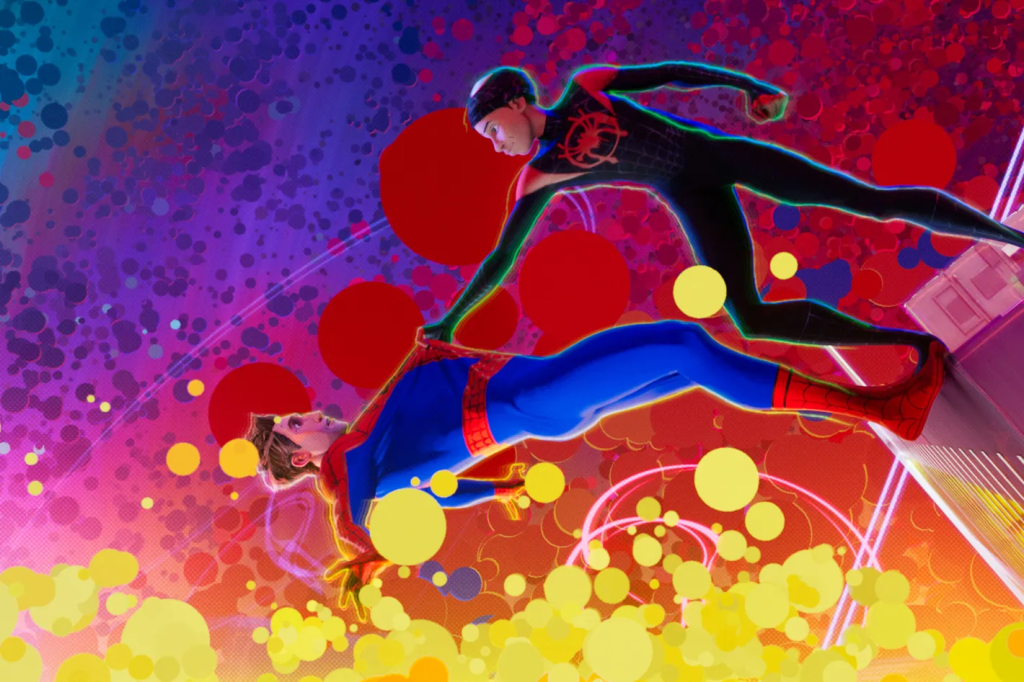
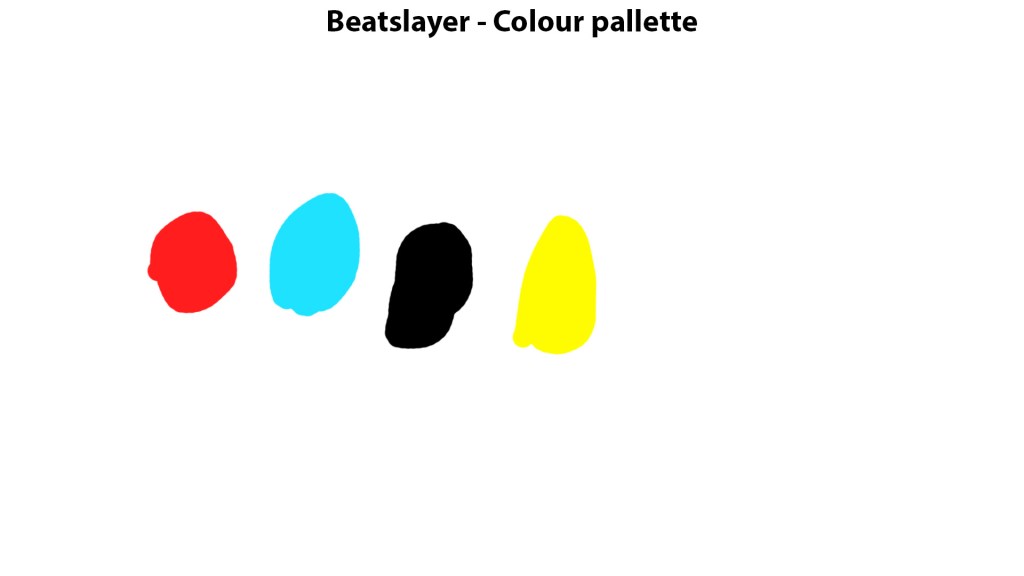
Artstyle: Imagine an artstyle with a bit of everything. Vibrant colours, breathtaking scenery, oppressive atmosphere and a small amount of comic book flare, inspired by the Spider-Verse films. Beatslayer will have all of this and more.
Story: The world of Beatslayer will have a rich, deep lore and an oppressive world, inspired by the likes of Dark Souls, which will also have strong ties to the gameplay.
Combat: Inspired by the likes of Sekiro, Beatslayers combat will be extremely tough, yet fair and rewarding for the player by using an emphasis on timing and parrying enemy attacks.
Beatslayer Will: Tell an inspiring story via short visual novel style cutscenes and through the gameplay.
Gameplay
The title screen will be short and sweet. “Press [X] to start.” After this, the player will be rushed into the world of Beatslayer.
The tutorial will hold the players hand for a short while. It will start out by teaching the player the basic controls. “Press [X] to move left/right, press [X] to jump” and so on. The game is designed to be played with a controller. Keyboard is also available, although it might be more challenging for the player. The controls will be intuitive and easy to learn, whilst the game itself will be tough but fair. It will involve a fair amount of trial and error.

An example image representing the screen the player will be given upon completing a level.
As mentioned earlier, the core loop of Beatslayer will revolve around “slaying” enemies in rhythm with the beat.
Enemies come in various different shapes and sizes, but here are some of the vague outlines:
– The nomad (Generic jack of all trades type.)
– The tank (Heavy hitter, slow attacks, lots of health.)
– The racer (Weak yet quick attacks, relatively low health.)
– Bosses (Special enemies, each varying in stats and attack patterns.)
Beatslayer uses a fairly simple gameplay loop. Get from A to B while slaying anyone who dares stand in your way, whilst also having a few collectibles in each level.
I decided upon having a difficult game as a response to the Souls series as a whole. These games are known to inspire players through their difficult combat, oppressive world design and feelings of loneliness, to name the most prominent aspects. Since the Souls series and Beatslayer are totally different genres, certain aspects would likely be hard to translate over. This is why I want to focus on the combat aspect in particular, as it has the most in common with Souls. In particular, Sekiro: Shadows Die Twice.
Soundtrack
Beatslayer will have a variety of music types, ranging from lo-fi, chilled beats for easier levels, to intense heavy metal for the harder ones. Hence, the soundtrack will have deep ties to the gameplay. In particular, the combat. Certain parts of the song the player is listening to will have different effects. Some may grant temporary attack boost, invincibility or a rewards boost, for example.
Combat
The combat of Beatslayer revolves around timing your parries and attacks well. There are two fundamental attack buttons. Parry (LB) and attack (RB). The player can also press the direction opposite of the way they are facing twice to dodge, although this is intended to be somewhat unreliable against enemies to avoid spam dodging. The player will have to listen out for the music and pay attention to audio/visual cues to know when to parry or attack. The player will also be provided with a healing flask, which can slowly be upgraded as the game progresses.
Cues
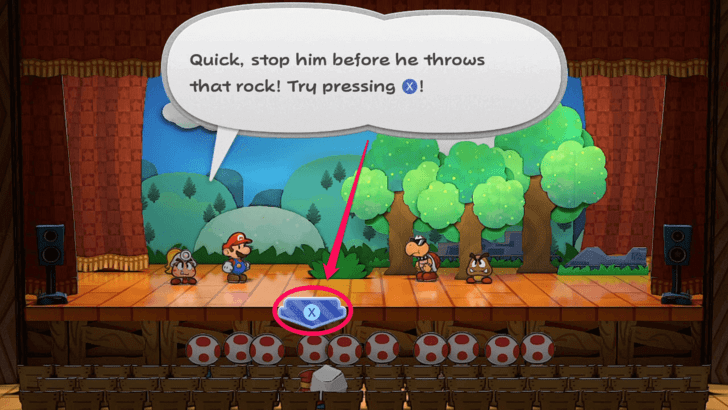
The visual cues for Beatslayer will be one of the ways that the game provides feedback for the player. A message will flash on screen when the player does well. For example, when an attack is well-timed or the player finishes a stage. The team also want to experiment with having a virtual audience that jump up and cheer when the player performs well, however this is subject to change, depending on how distracting the players find it.
When the player times an attack perfectly, the rewards and feedback will be greater.
Aesthetics
As mentioned earlier, Beatslayer will have a cartoony art style with a touch of comic book flair. However, there will also be a different aesthetic flair with each level.
Scoring
Beatslayer will use an arcade-style points system, although this doesn’t affect anything for the player other than leaderboard rankings and potential bragging rights. The player can get a higher score via the following:
Dynamic
– Slaying enemies (Different types reward different points, alongside other factors such as the style used to slay them, how many hits you took doing so and how close you were to the rhythm.)
– Picking up collectibles
– Less/no healing
– No deaths (The players first death freezes the points counter until they restart the level.)
– Time spent in the level (Less time = higher score)
Challenges
– One-hit-wonder (Defeat an enemy(s) with one attack. Stackable.)
– Explorer (Collect every golden rune in a level. Not stackable.)
– Untouchable (Take zero damage in the level. Not stackable.)
Visuals & Graphics
The visuals and graphics for Beatslayer take inspiration from a few different films and games. In particular, the comic book-inspired artstyle are inspired by the Spiderverse films.
The visual feedback from the virtual audience is inspired by the Paper Mario games.
The oppressive world, and the atmosphere it creates are inspired by the Souls series.
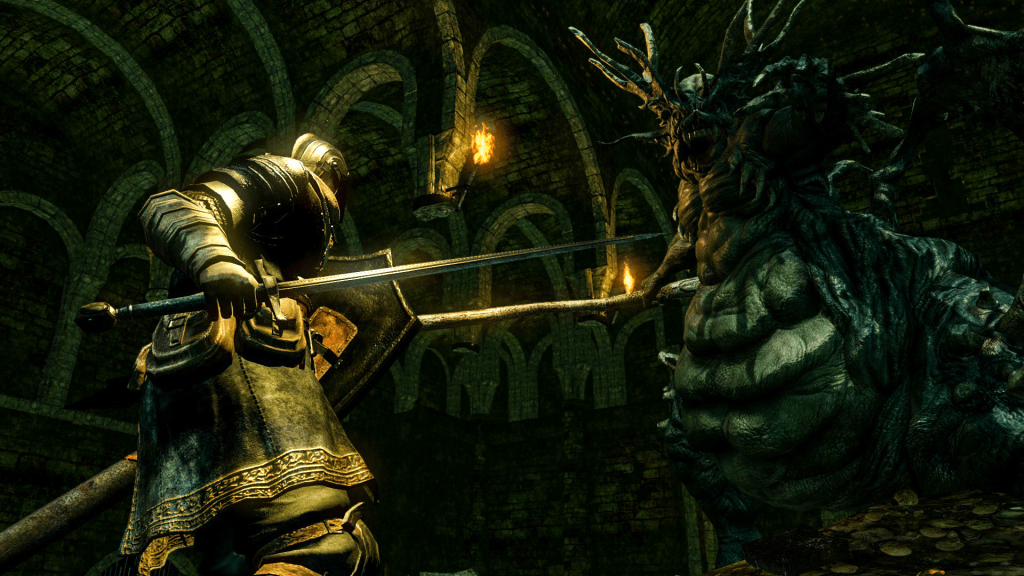
The reason we chose this approach to art design is to make the game stick out in the players mind and to give an oppressive yet hopeful atmosphere. This also ties in with the gameplay itself.
World & Story
The world of Beatslayer is going to have an oppressive and melancholy feel to it. This will be achieved via an opening cinematic glossing over some of the lore once the player has finished the tutorial.
“The year is 21XX. Humanity has reached its breaking point. From the ashes of society, we have rebuilt and reformed this city into a dystopian paradise.”
Beatslayer will be set in Estopia City, a dystopian cityscape which also functions as a utopian paradise. The citizens love it there. Every last one of them. If you don’t? Well, you don’t want to find out.
Estopia City was built upon the ruins and ashes of old-school Japan. After World War III broke out in the previous century, the human race was never the same. Facing extinction, we decided to band together to form “HUM4N1TY”, an organisation dedicated to preserving the human race.
“The thing is, even after World War III and the literal alien invasions, we never gave up at our goal to give humanity a second chance. The world may have turned upside down, but at least we have hope. We have ourselves.”
– Captain [XXX], 20XX
After the tutorial and lore cutscene, Beatslayer throws the player right in. The player will take control of an unknown, predefined character. He wakes up in his apartment, ready for another great day in Estopia City. On his way to work, he receives a call from a mysterious entity. “[Player name]. You have to get out of Estopia City. We need you.”
This mysterious entity will later be revealed to be a defector of the aliens. They are trying to warn the player that the aliens are planning another invasion.
Technical specs & Engine
The chosen engine for Beatslayer is Godot. The team initially decided this as Unreal or Unity would probably be overkill for a project of this size. Godot also has good 2D tools, which will make development much easier. Beatslayer is not a technically expensive game, as it is completely 2D.
Demographic
Beatslayer will be aimed at slightly older audiences, particularly those with more experience than the average player and those who enjoy souls.
Accessibility
Beatslayer will include a host of accessibility options for a large variety of people. When the player boots up a new save file, they will be prompted with a menu containing several different accessibility options and presets. Choosing any of these will NOT lock the player out of any achievements or unlockables. To avoid alienating these players, we will avoid using terms such as “Normal” and “Easy”, opting instead for “Recommended” and “Assisted”.
Game speed – This set of options will allow the player to adjust two different aspects; Reaction window for parrying enemy attacks and the reaction window for attacking enemies after parrying.
Visual – This set of options includes settings such as; Arachnophobia mode, mature language filter, high-contrast UI, several different colourblind modes, alongside industry standard options such as brightness, contrast and the option to disable film grain, chromatic aberration and motion blur.
Audio – As audio is an integral part of the experience, it is not recommended for players to disable the music in Beatslayer. However, if a player is hard of hearing or simply doesn’t like the music, there will be adjustments for it. One idea to help those who play without music is a chart displayed on the screen which dynamically changes based on the music, or what effects the music would have on the player.
As is industry standard, players will also be allowed to adjust and experiment with their own controls and control styles. Support for accessible game controllers will also be available.
Monetization & Platforms
Beatslayer will be sold for £10.99, or $14.99. It will initially launch on PC via Steam, Itch.io, GOG and Epic Games. Dependant on audience interest, console ports for the Nintendo Switch family, PS4/5 and Xbox One/Series family will be considered later down the line.
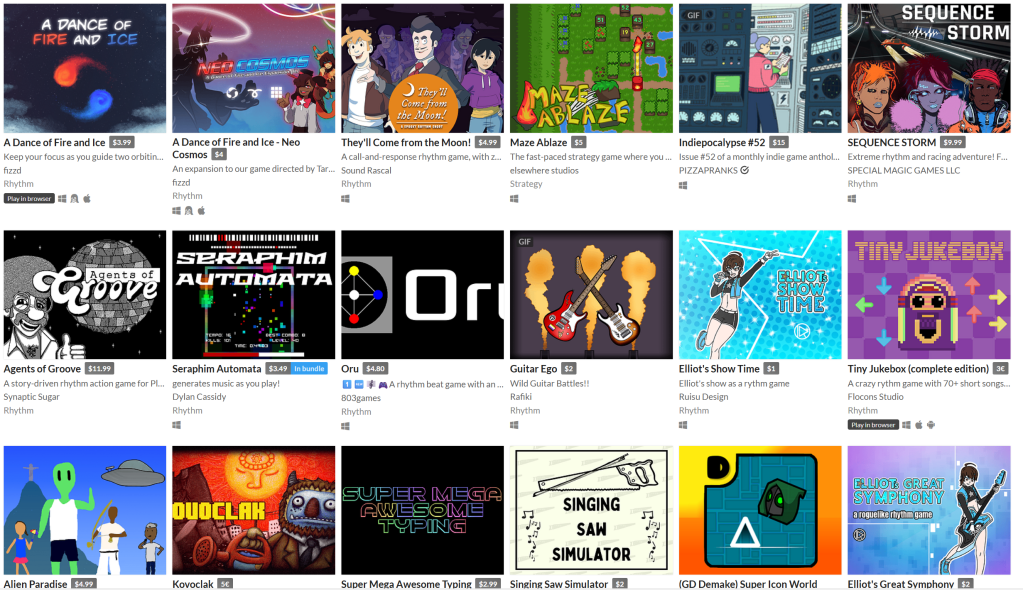
When compared to other Rhythm games on itch.io, it is a bit above the standard. However, we feel like it is justified due to the amount of work required to create Beatslayer. Rhythm Heaven Fever, a similar game, launched at $29.99 back in 2011, which is roughly equal to $43 nowadays.
Additionally, there are other rhythm games on sites such as gg.deals for similar prices.
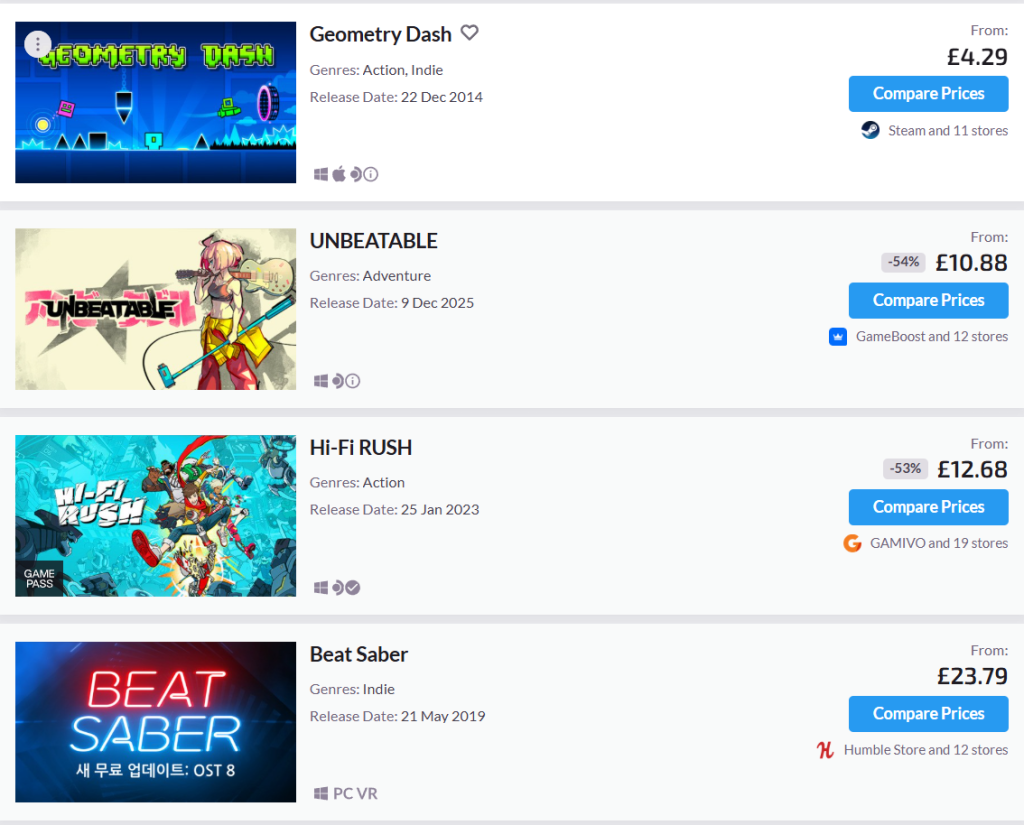
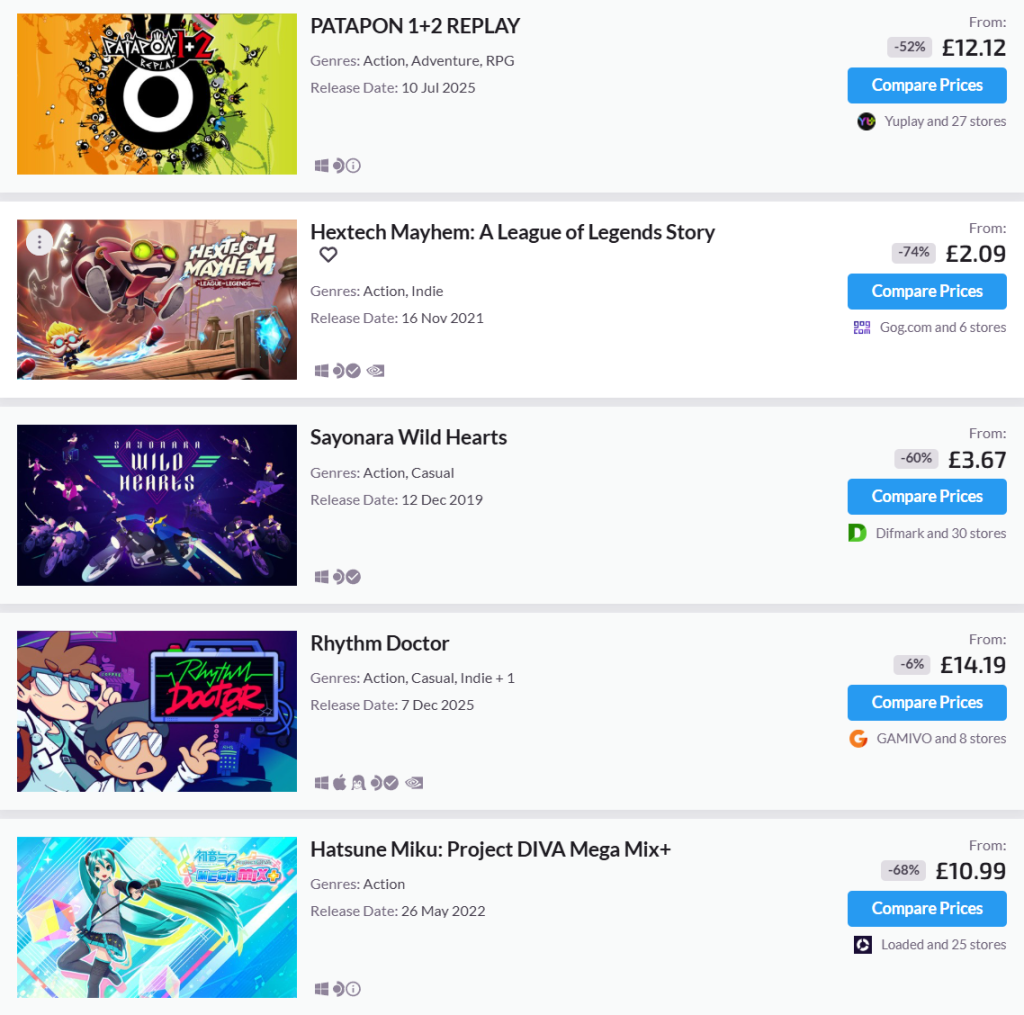
Taking into account that these are already fairly heavily discounted, alongside the fact that some of them are recognisable brands, such as Hatsune Miku, Patapon and Beat Saber, we again feel like this justifies the price of Beatslayer.
Beatslayer will contain no in-app purchases involving digital money, pay-to-win upgrades or cosmetics. All rewards will be unlocked authentically. A paid DLC story expansion is being considered, which will be about £4.99, or $6.99.
Beatslayer contains no Licensed music or IP. As such, we are hoping that the game will remain on digital storefronts for many years to come. When it comes to things like DLC, bug fixes and potential future rereleases or remasters, we aim to preserve as much as possible. Even if, years down the line, we release an enhanced remaster with additional content and enhanced performance, the original will still stay up for as long as possible.
Quality Assurance & Production
Beatslayer will be rigorously tested for bugs and glitches. The functional testing will involve playing through the game multiple times to ensure all the systems work as intended. We will also test compatibility and performance on a range of hardware with varying technical specs. Beatslayer will also be tested for balancing to ensure the game remains tough, but fair.
A large amount of work will be required to ensure that Beatslayer feels good to play in every way. It needs to be challenging yet fair, rewarding, fun and inspiring.
Design log
Over the course of the past few months, my vision for Beatslayer has changed a fair amount. Originally, I wanted it to be a game focused purely around rhythm. As development progressed, we gave the player the ability to move, so there was that aspect for them to focus on.
Many changes have been made since progress started on the GDD. With regards to the artstyle, I originally wanted it to be a lot more cartoony. Think something similar to the Rhythm Heaven series.
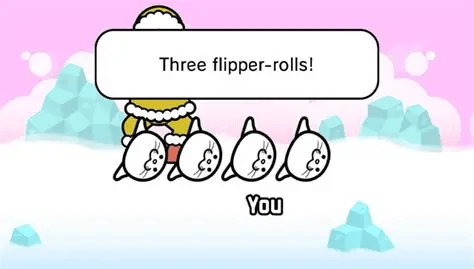
As development progressed, we considered pixel art and a more comic-book inspired artstyle. We settled on the latter.
Questionnaire & Feedback
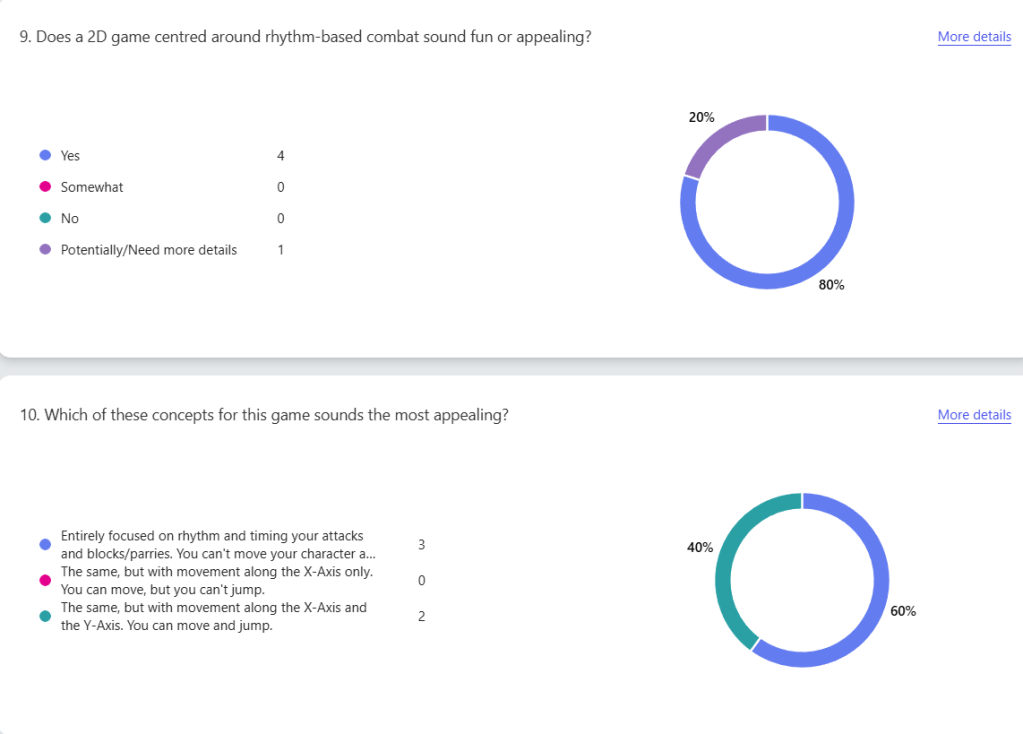
According to some of the feedback I have received from my peers, the most appealing sounding version of Beatslayer for most people involves no movement from the player. Essentially, the player would be focused purely on parrying and attacking.
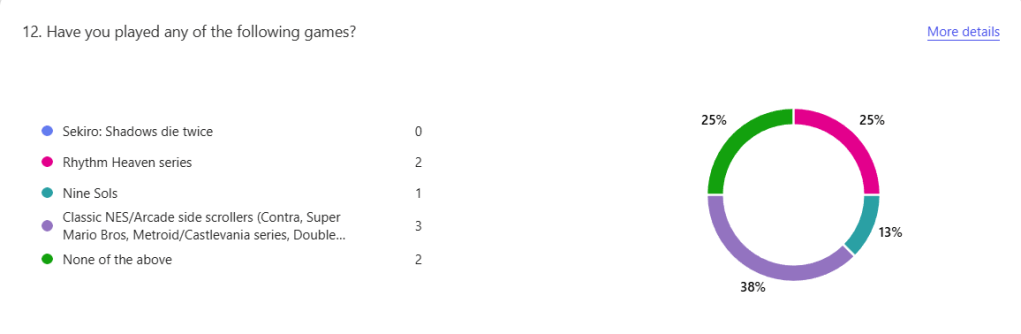
In the question above, I asked for a few specific games which my peers have played. I chose these games as a baseline for my inspiration for Beatslayer.
Bibliography
Reference list
Bandai Namco and FromSoftware (2018). DARK SOULS REMASTERED. [online] Bandai Namco Europe. Available at: https://en.bandainamcoent.eu/dark-souls/dark-souls-remastered [Accessed 2 Oct. 2025].
Character Design References. (2019). Art of Spider-Man: Into the Spider-Verse (part 1). [online] Available at: https://characterdesignreferences.com/art-of-animation-7/art-of-spider-man-into-the-spider-verse-part-1 [Accessed 2 Oct. 2025].
FromSoftware and Activision (2019). SekiroTM Shadows Die Twice. [online] Sekirothegame.com. Available at: https://www.sekirothegame.com/uk/en/ [Accessed 2 Oct. 2025].
https://www.facebook.com/profilequentinmarroule and Marroule, Q. (2025). SPIDER-MAN INTO THE SPIDER-VERSE Poster Art | Poster By Quentin Marroule. [online] posterspy.com. Available at: https://posterspy.com/posters/spider-man-into-the-spider-verse-22 [Accessed 2 Oct. 2025].
Jones-Read, J. (2022). Video Game Licensing – How It Works, How to Get a License, How Much It Costs. [online] Video Game Design and Development. Available at: https://gamedesigning.org/gaming/licensing/ [Accessed 28 Nov. 2025].
Marti, M. (n.d.). Game Design Documents – Gamescrye. [online] gamescrye.com. Available at: https://gamescrye.com/resources/game-design-documents/ [Accessed 2 Oct. 2025].
Generalist Programmer (2025). Complete Game Testing & QA Guide: Career Path, Tools & Best Practices 2025. [online] Generalist Programmer. Available at: https://generalistprogrammer.com/game-testing-qa [Accessed 8 Jan. 2026].
 Dylan Brant