Game pitches & Inspired games
A game pitch deck involves a short presentation or document which is designed to briefly outline a game’s idea. Additionally, they can be useful for showcasing how far along in development the team is, which can be good for providing support wherever it is needed. Things like budget, concept art, inspiration, etc. can also be useful to include in a pitch deck.
It is often overkill and unnecessary to go into a large amount of detail when it comes down to pitch decks. Stuff along the lines of deep lore and backstories, detailed enemy stats, specific technical details, to give a few examples, are often considered to “bloat” a pitch deck. A concise summary is usually enough.
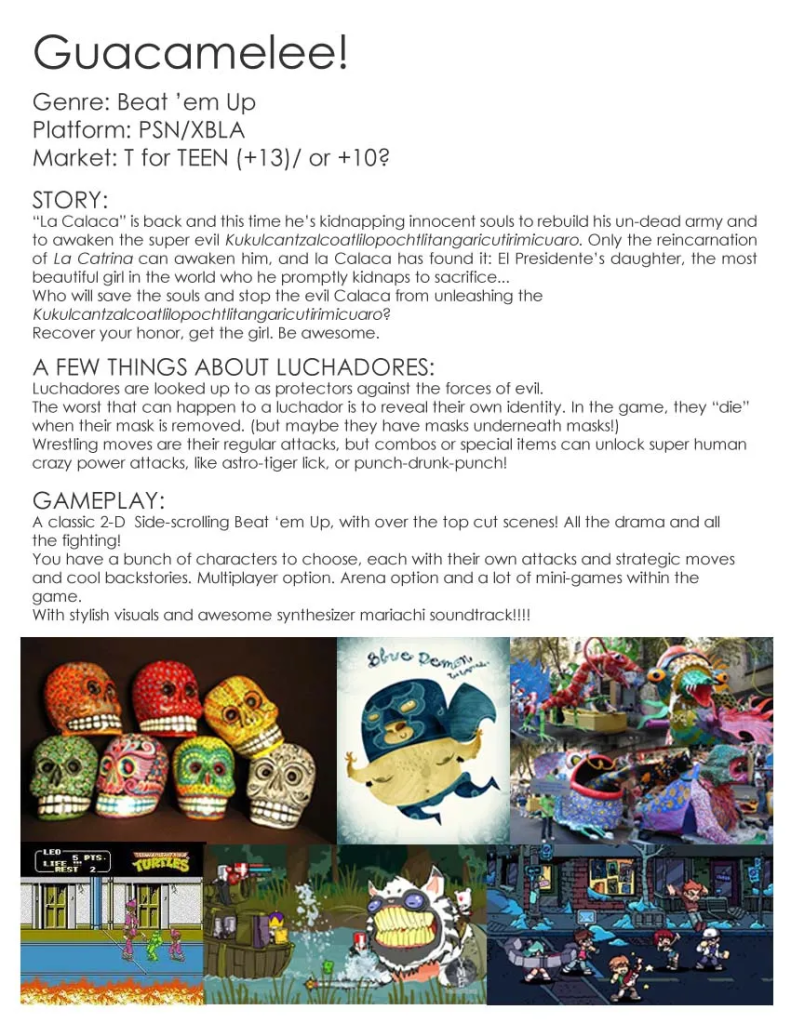
Above is the one-page pitch for the popular indie game Guacamelee!. While this isn’t directly comparable to my project as they are wildly different games (Metroidvania VS. Walking simulator), I still think this is a good example of a concise and clearly outlined pitch deck, despite the fact that this initial pitch is a lot different to the final product.
In the initial pitch, studio artist Augusto Quijano penned the initial idea of a “bombastic” side scroller beat ’em up game with a setting inspired by traditional Mexican mythos and culture, as inspired by his own childhood growing up in Mexico.
As mentioned, a good chunk of the initial pitch was changed throughout development. Guacamelee! was originally more story and character focused. From what I can tell, this concept was a lot closer to something like Double Dragon or Streets of Rage. As a matter of fact, the games on the bottom of the pitch back up this idea. From left to right, we have what I believe to be a Teenage Mutant Ninja Turtles game, Castle Crashers and Scott Pilgrim VS the World.
My project pitch I did earlier is close enough in concept to what I’ve been talking about here.

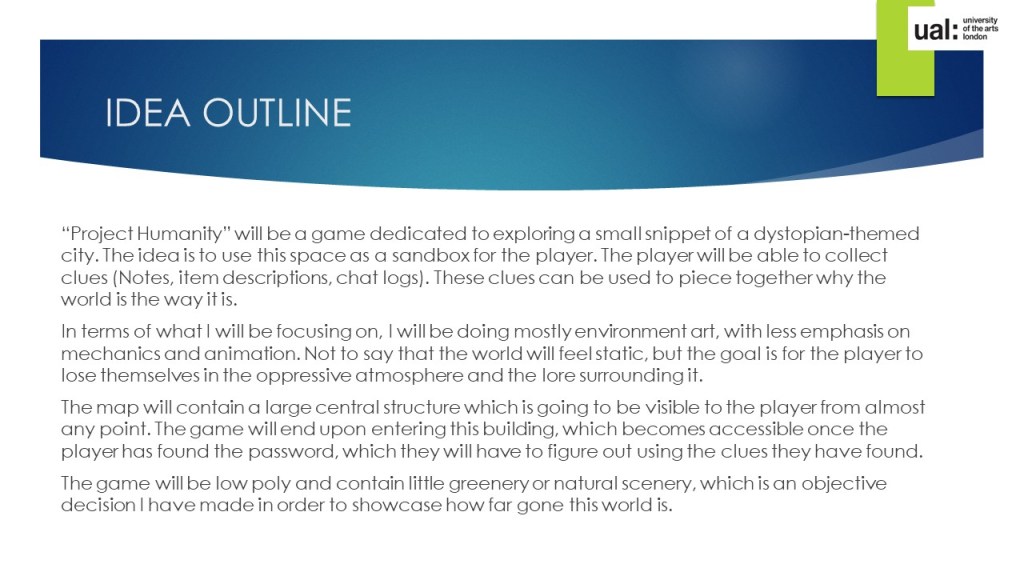
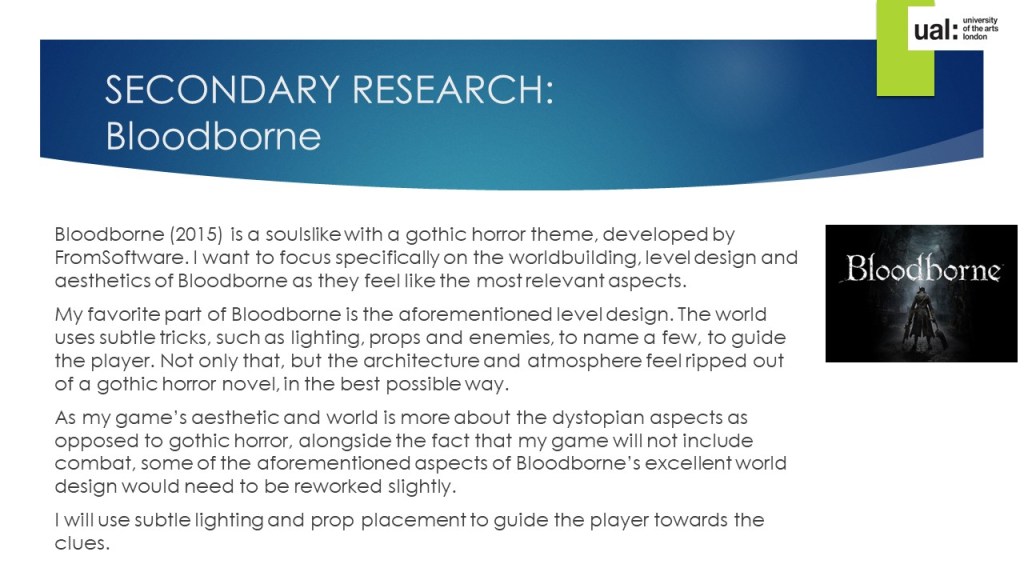
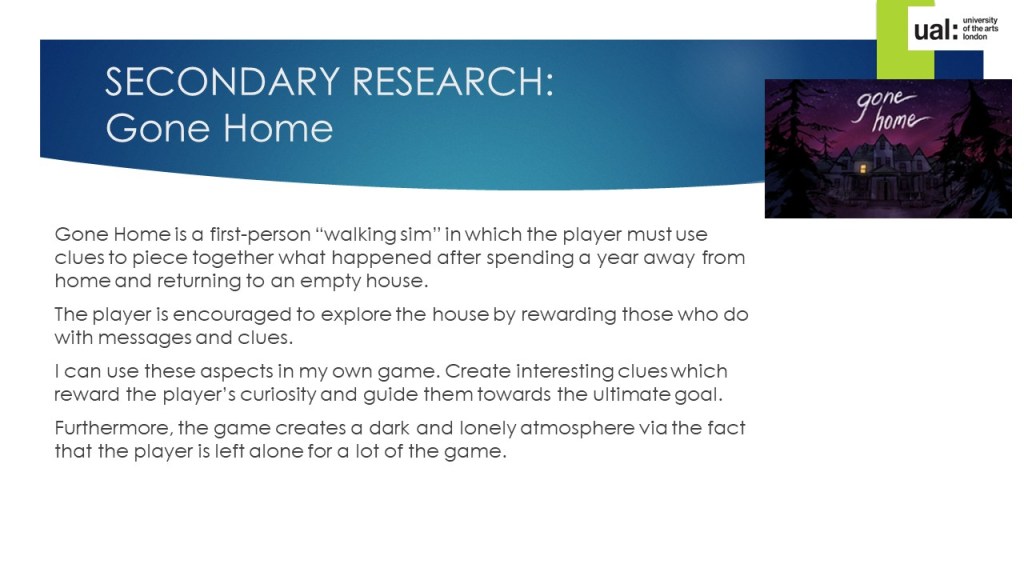
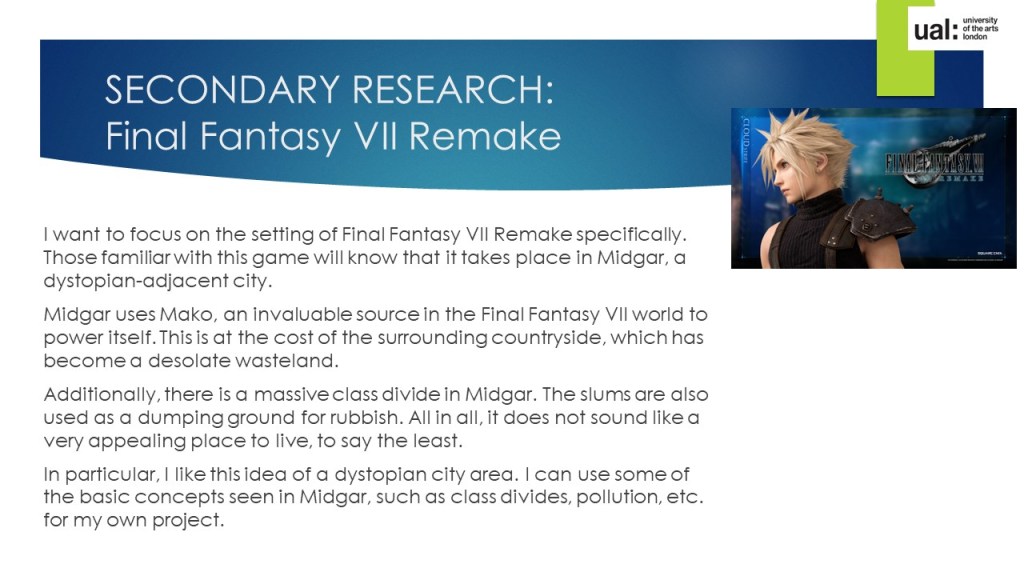
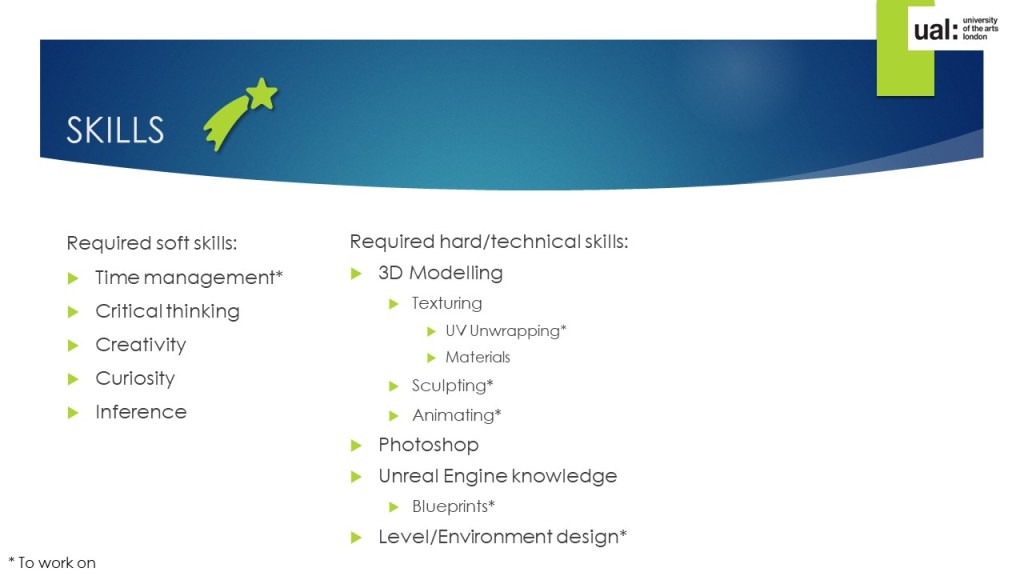
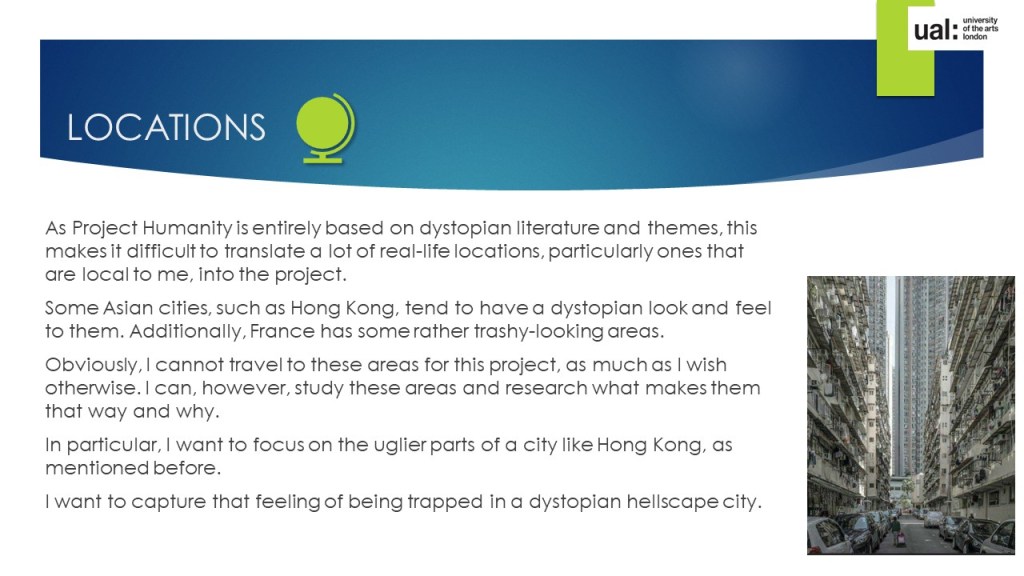
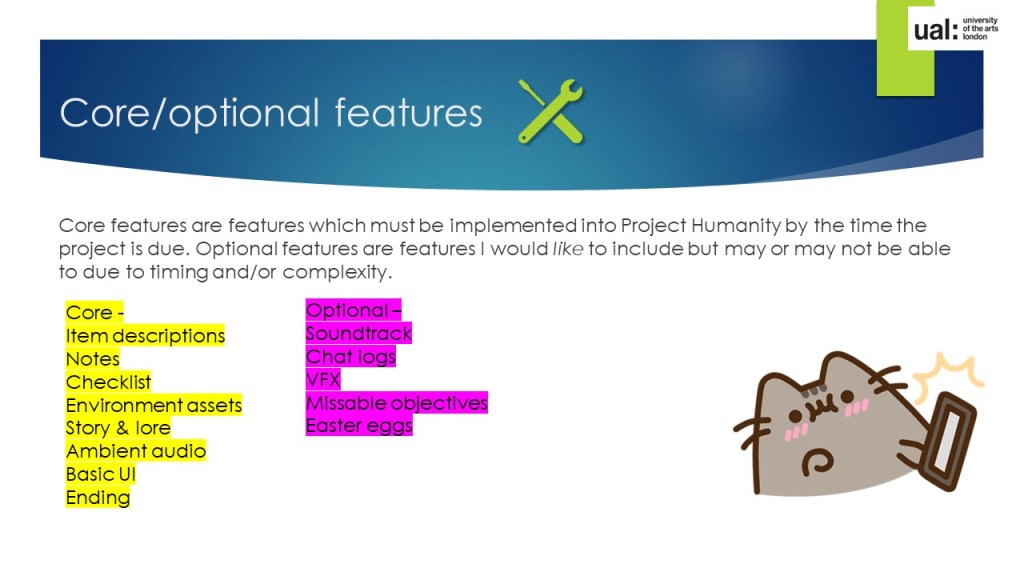
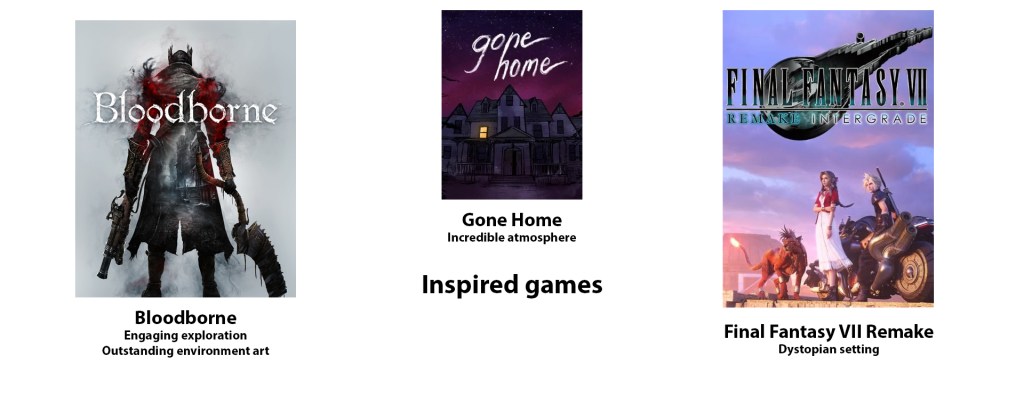
As mentioned in the above slideshow, Project Humanity takes inspiration from several different games. The mentioned ones in the proposal were Bloodborne, Gone Home and Final Fantasy VII Remake. To summarize, I want to take influence from the outstanding world and level design of Bloodborne and Final Fantasy. I also want to take the mystery and core gameplay loop of Gone Home and incorporate it into my own project.
I would also like to take a moment here to talk about the level design of Bloodborne and how it tells a story via its use of environment design.
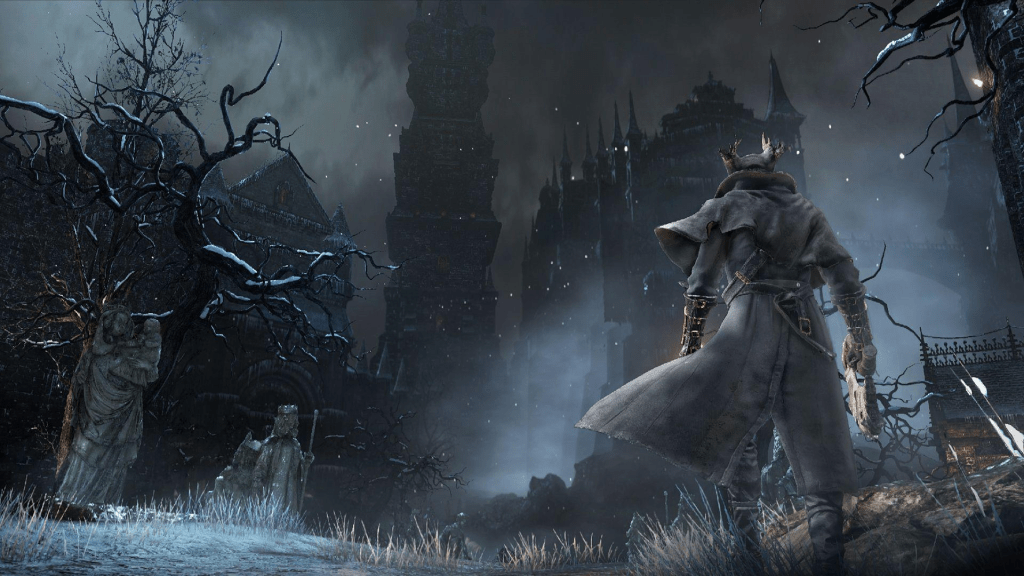
One of Bloodborne’s strongest aspects, in my opinion, is how great the world is. Despite the fact I’m far from an expert on the lore of Bloodborne, I can still ascertain that this world is broken in many ways. One of the ways it achieves this effect is using oppressive-feeling architecture, lighting and effects. This is represented well in the screenshot above.
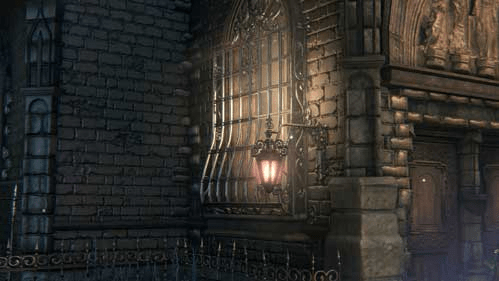
Bloodborne uses a subtle trick players may or may not have subconsciously noticed regarding props and lighting. Whenever a player is able to interact with a building’s inhabitants, it is signified by a small lamp, as seen in the screenshot below. This inspires me to highlight interactable elements in Project Humanity in a similar fashion.
A common aspect in Bloodborne and plenty of other games in the series involves using shortcuts, or ‘backdoors’ in order to reach hidden paths or areas. Sometimes these areas contain major bosses, enemies, gear and such. And yet they are often completely optional. A good example of this is the Forsaken Castle Cairnhurst, or the entirety of The Old Hunters DLC. This gives Bloodborne a very strong sense of interconnectivity, which a lot of players appreciate, alongside Bloodborne’s many other incredible elements.
FromSoftware very clearly pride themselves in their strong level design and environment art, which was inspired by traditional gothic horror.
In an interview with Hidetaka Miyazaki, who is the creator of Bloodborne and various other notable FromSoftware games, he specifically mentions that the sense of horror in a game such as Bloodborne is important as it ties into the sense of overcoming a huge obstacle and enhancing their sense of achievement, which is a common theme in these games.
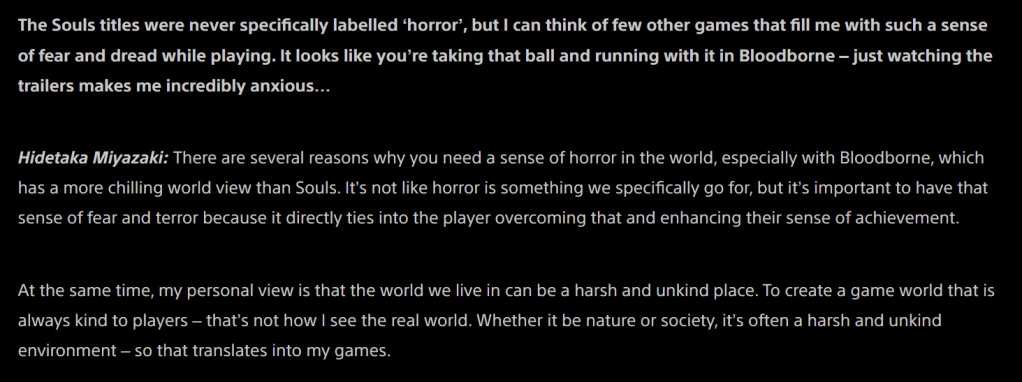
This interview can be found here.
While horror isn’t really a major focus of mine with Project Humanity, I would like to incorporate that sense of overcoming a challenge or obstacle, even if it is just a small puzzle.
On Metacritic, Bloodborne is, to this day, still getting new user reviews on a regular basis, which is a testament to its strong legacy. These reviews often cite aspects such as its strong combat, world design, OST, etc.
When it comes down to my own personal opinions on Bloodborne, I think it is a masterpiece. The offhanded method of storytelling, the breathtaking visual style, the exhilarating combat, the fluent yet complex level design and the moody OST all come together to create an incredible experience. Obviously, there are more amazing aspects than the few I mentioned, but those few really stand out to me. Even some minor annoyances others may have with the game can be justified due to in-game lore reasons or the such. For example, needing to farm for blood vials, which is Bloodborne’s method of healing – could be written off as the hunter (the player) going “bloodthirsty”. Additionally, the lack of a map screen of any type was a gripe I had in the early hours of the game. As I progressed, however, I found it to be less of an annoyance and more of a feature which I enjoyed working around. At first, Bloodborne’s level layouts could be seen as a bit difficult to navigate for some new players, which is a trap I fell into. Again, I believe this to be to the games benefit. Not only did it further push the feeling of overcoming adversity, but it naturally felt very satisfying to navigate the streets of Yharnam. In terms of more modern FromSoftware titles, they can be slightly easier to navigate due to a few factors. In Sekiro’s case, the player gets shown a preview of any area they are about to fast travel to, which, admittedly, would have been nice in Bloodborne. Elden Ring has a full-blown map, which is necessary for a game of its scale, in my opinion.
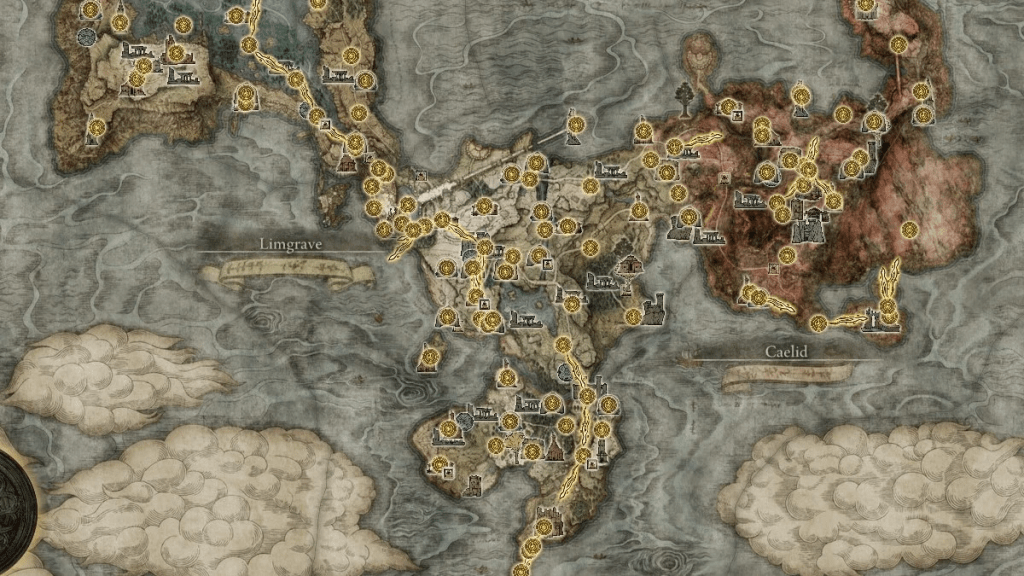
I do not want to incorporate a map screen into Project Humanity, however, partly because I feel like it would be unnecessarily-spent time I could use doing something more important. The reason I bring up the map, or lack thereof, in Bloodborne, is because it ties into my idea of creating an oppressive atmosphere and world.
Gone Home Research
Gone Home generally received favourable reviews, especially from IGN, who described it as a remarkable first person adventure and achievement. On Metacritic, nearly all of the reviews I skimmed through were very positive. The user reviews were generally a bit less favourable. Some of these reviews described it as “dull” and “insignificant”.

Keeping in mind that these reviews are open to anyone who feels like submitting one, I’m going to assume the majority of these reviews are from the lenses of more casual players. Which isn’t to say that I value these opinions less, as it’s actually the opposite. Obviously, the vast majority of players are not going to be professional game reviewers. This means that I should probably try to cater to casual tastes wherever possible. Although, it doesn’t help that walking sims are not the most popular genre out there.
From what I can tell, most of the negative criticisms of Gone Home stem from its short runtime and narrative.
To conduct my own research, I will be playing Gone Home. I will be taking notes about various different aspects, including; level design, atmosphere, sound design, etc.
As Gone Home is a fairly concise experience (2-3 hours), I should be able to finish it in one or two sittings.
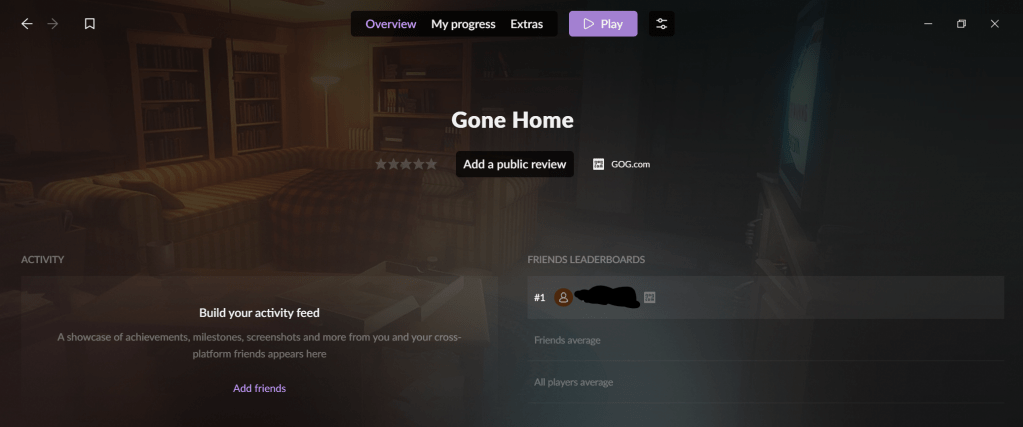
I will be jotting down notes about the game as I play. This will include, but is not necessarily limited to;
- Well-designed aspects (Puzzles, ambience, writing, etc.)
- Aspects I think could be improved on
- General notes about the game
This playthrough will be done completely blind, meaning that I know nothing about the game going in.
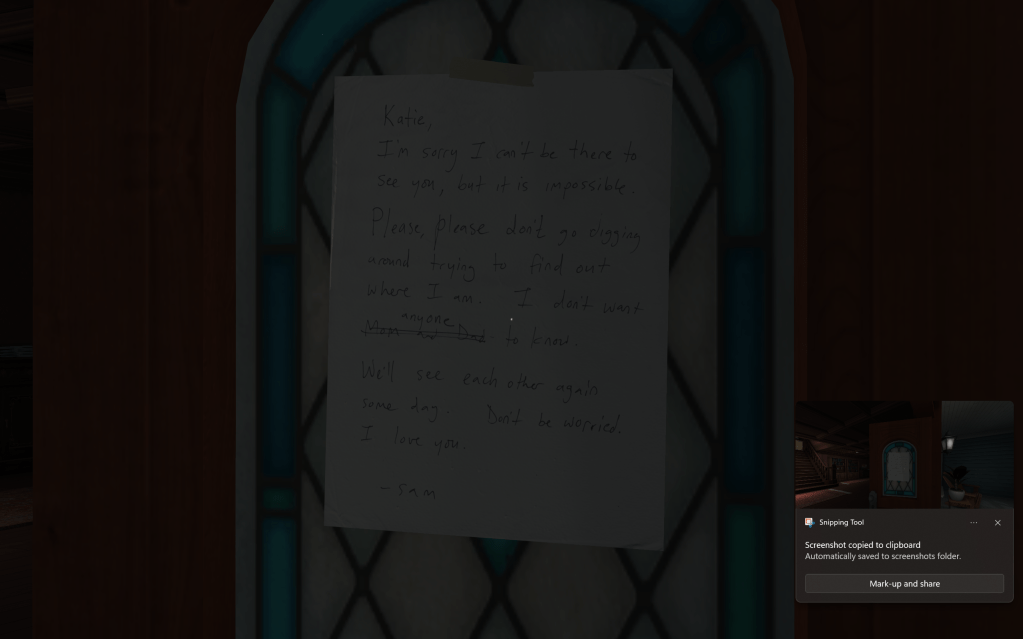
Right off the bat, the game starts out with a voicemail, presumably the protagonist. The game has some great ambience and the rain sounds are very relaxing to listen to. There is a lot of interactivity with the house and its items.
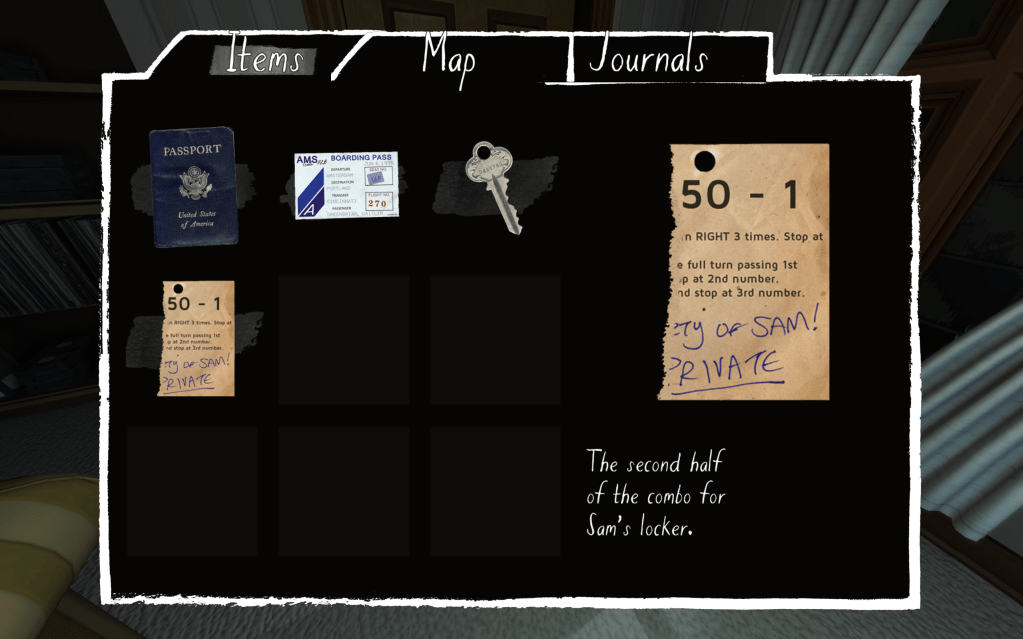
After finishing the game, I have a few thoughts.
First off, the technical performance on PC was not the best, with frequent lag spikes no matter what settings I changed. Putting that aside, the game itself was good. As mentioned, the ambience was great. It told a fairly dark story which was fairly grounded in reality, which I will go into detail on in a bit. There were some interesting optional tidbits of lore which could be found by the player, which I generally like in most games.
(Spoiler alert) The story revolves around Katie’s family, who have disappeared during her trip to Europe. After moving in, Katie’s little sister, Sam, struggled to adjust to a new school. She eventually made friends with another girl, Lonnie, with whom she became romantically involved after sneaking off to a concert with her. After a few incidents at school, the parents became aware of their relationship. Lonnie was due to be shipped out to begin her service. This combined with the fact that the parents were in denial about their daughter being gay led Sam to deal with a lot of stress.
A couple of days after Lonnie’s farewell show, which coincides with the day of Katie’s homecoming and Sam’s parents leaving for a counselling trip, Lonnie departed. She called Sam from a payphone telling her that she wants to be together. Sam leaves to find her, but assures Katie via a final journal entry that they will see each other again.
As mentioned, there are some optional pieces of story littered about the house. These include; separate romantic subplots, the ghost of the previous owner of the house and the dad being an author who is obsessed with the JFK assassination and wants to write a story about a 13 year old going back in time to stop it.
Overall, as much as I enjoyed most of the aspects of Gone Home, I do feel like it’s not massively my type of game. In some ways, it might have been better off as a movie or a short novel. But then again, who am I to question the artist’s intent?
Secondary Research
Dystopian themes & world
As I am creating an environment based on dystopian literature and aesthetics, I want to get some thorough research done on this topic. Potential resources can include; articles, films, books, videos, etc.
Research
A few key pieces of dystopian media I want to research and reference for my project include Blade Runner (1982) and Nineteen-Eighty-Four. As mentioned in the project proposal, I also want to reference aspects of Final Fantasy VII Remake. In particular, the oppressive world design and dystopian themes.
Dystopian literature often tackles heavy themes. These can include, but are not necessarily limited to; oppression, tyrannical governments, environmental disaster or other forms of societal collapse. A few other common aspects in a lot of dystopian media is propaganda, censorship, force via the use of police, worship of a certain political figure and the promise of an unrealistic goal.
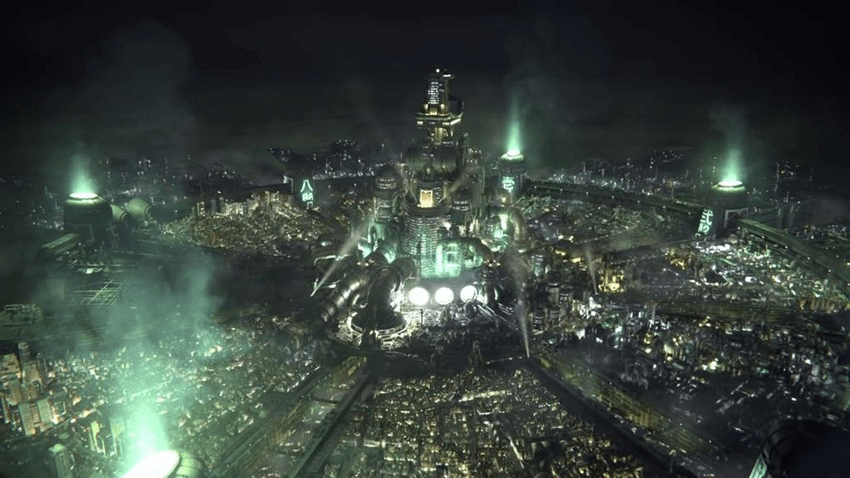
In Final Fantasy VII Remake, the player is placed inside the city of Midgar. As mentioned in my project proposal, this city features several dystopian elements. Class divides, pollution, etc.
When it comes down to the way cities are designed – a good chunk of it is obviously up to the planners and designers. In a typical real-life urban area, these people will need to think about various aspects and accommodate the housing and facilities to the needs of its citizens and visitors. These can include, but are not necessarily limited to; Geographical location, local resources, funding, politics, energy use, population, etc.

The iconic London is a great example of urban planning and designing done right. This is in spite of the fact that it’s the most expensive place to live in the UK by a large margin. London has a large amount of activities, scenery and the such. Additionally, it has plenty of shops and housing. Ergo, it is what I would consider to be a well-designed city, which is what one would hope for, as it is home to 9 million residents.
Hong Kong is a good example of contemporary architecture. Contemporary architecture, at its core, means that there is no single ‘dominant’ style of architecture. Unfortunately, as there is a lack of available land, Hong Kong has very little left in terms of historical buildings. As it happens, this is a good example of what I am looking for in my dystopian-themed game.

The above image depicts a series of Tong Laus in Hong Kong. These are essentially three or four-storey buildings which are tightly packed in city blocks. These combined southern Chinese and European architectural elements. The ground floor would typically be a shop of some description, with apartments and small balconies on the top floors. These were a mainstay in Hong Kong until around World War II. Some of these buildings survive to this day in a derelict state.
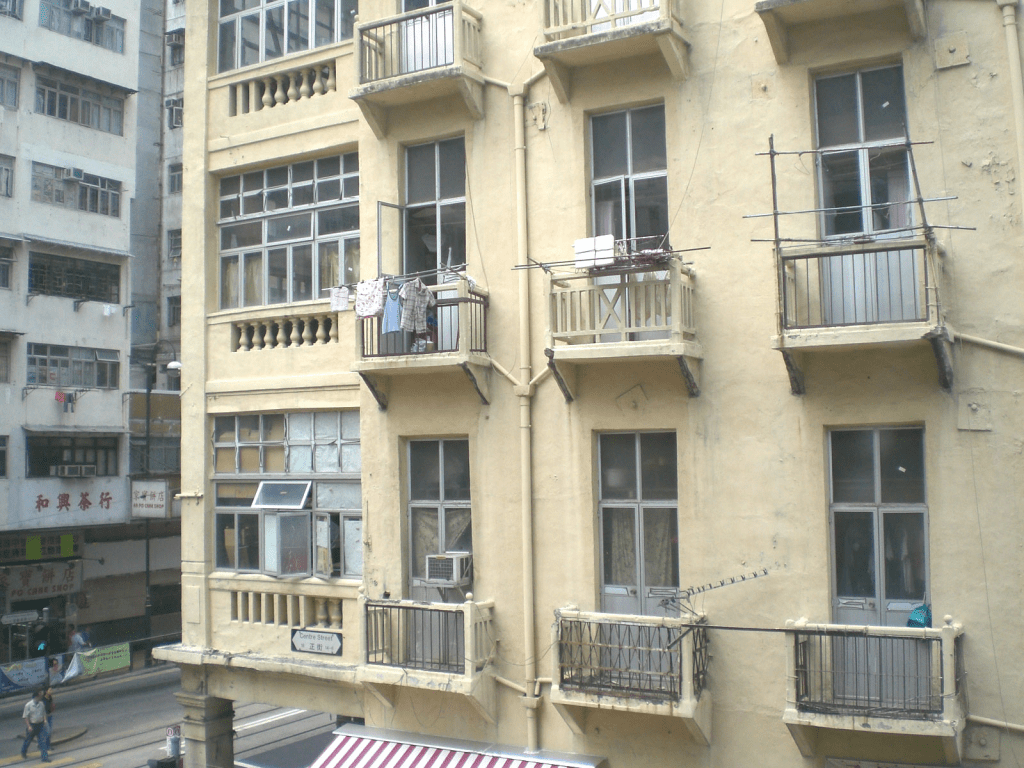
A look inspired by the above image would be perfect for what I’m going for.
Modernism is a late 19th century – mid 20th century global movement characterized by a rejection of classic themes and industrial influence. This links into my project because modernism has strong ties to dystopian themes.
Brutalist architecture descends from modernism and consists of several aspects. Most notably, it is characterised by minimalist, and some may say boring design. The name brutalism actually stems from the French expression béton brut, which translates to raw concrete.
Even during the beginning, Brutalism was conceptualised to be “honest”. In the works of Alison and Peter Smithson, who were a British architect couple active during the mid 20th century, it stood for an architecture style that was very open about how it was supposed to be interpreted and used. It “revealed” the materials and structure of buildings.
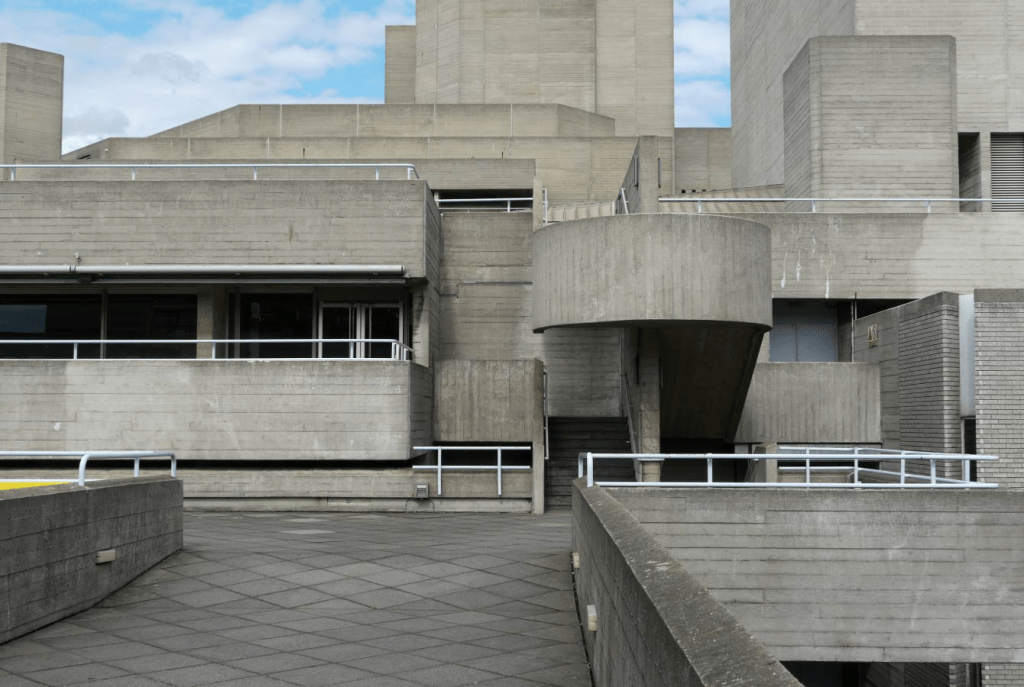
Brutalist architecture began to rise after the end of World War II. As a vast amount of buildings were destroyed during the war, the need arose for more houses, schools, shops, government buildings, etc. This naturally led to brutalist architecture becoming the norm at this point.
Brutalist buildings are often defined by a number of factors. These can include but are not necessarily limited to;
- “Bland” or lack of cosmetic style
- Repetition, modularity and megastructures
- Material honesty and legible structure/construction
- Deep windows and heavy volumes
- Strong silhouettes
Generally speaking, brutalist architecture is recognisable less by a single material than by a combination of form and intent. Brutalist buildings are assertive and aim to carry across their purpose without cosmetic mediation.
Moving on to a different piece of media I want to research. Blade Runner (1982) is set in a dystopian version of Los Angeles in the year 2019. In this universe, synthetic humans, known as replicants, are manufactured by a large corporation in order to work on space colonies. A fugitive group of replicants escape back to earth, kicking off the events of the film. This links into my project because I want my fictional city of Erneas to have remnants of an Artificial Intelligence revolution. However, this will be left intentionally vague to create an air of mystery around it. I want the player to ask questions such as;
- What type of Artificial Intelligence started the revolution?
- How did this affect the city of Erneas?
- How did the Artificial Intelligence revolt?
The final game may answer one or two of these questions.
As mentioned in my planning, I want to base the final area (Inside central Erneas Tower) on liminal spaces. These are a popular genre of image which circle around the internet a lot. They are defined by their use of nostalgic and dreamlike imagery to achieve a sense of comfort and uneasiness within the viewer. Another common theme with liminal spaces is a sense of loneliness, as liminal spaces rarely contain any other humans.
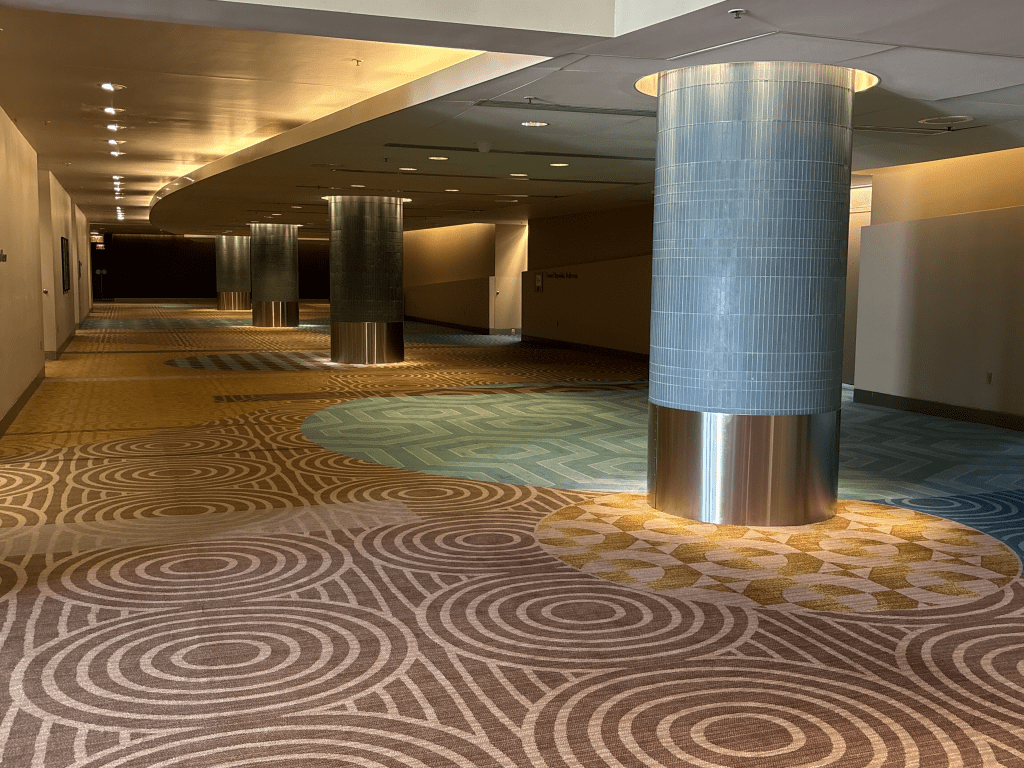
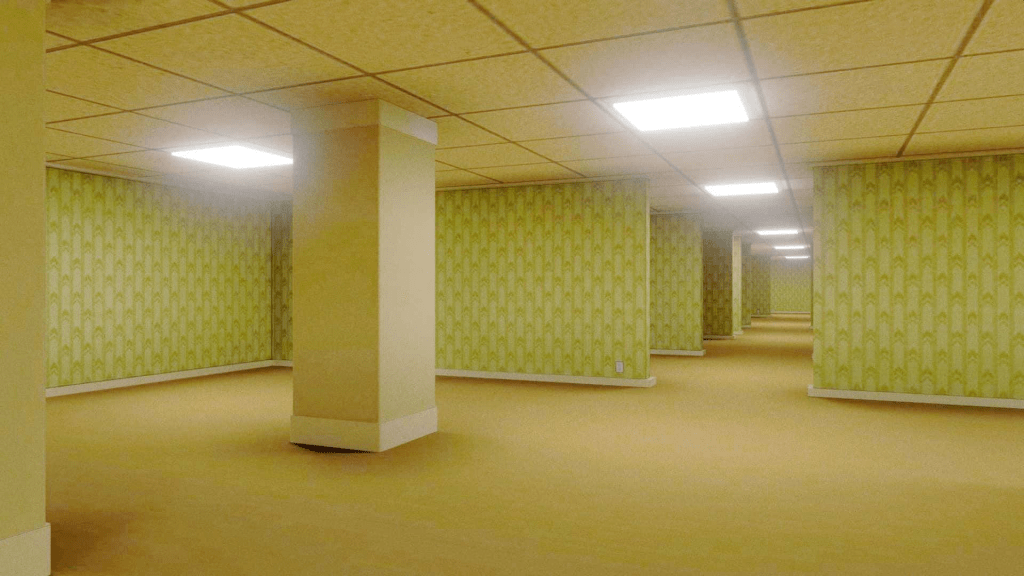
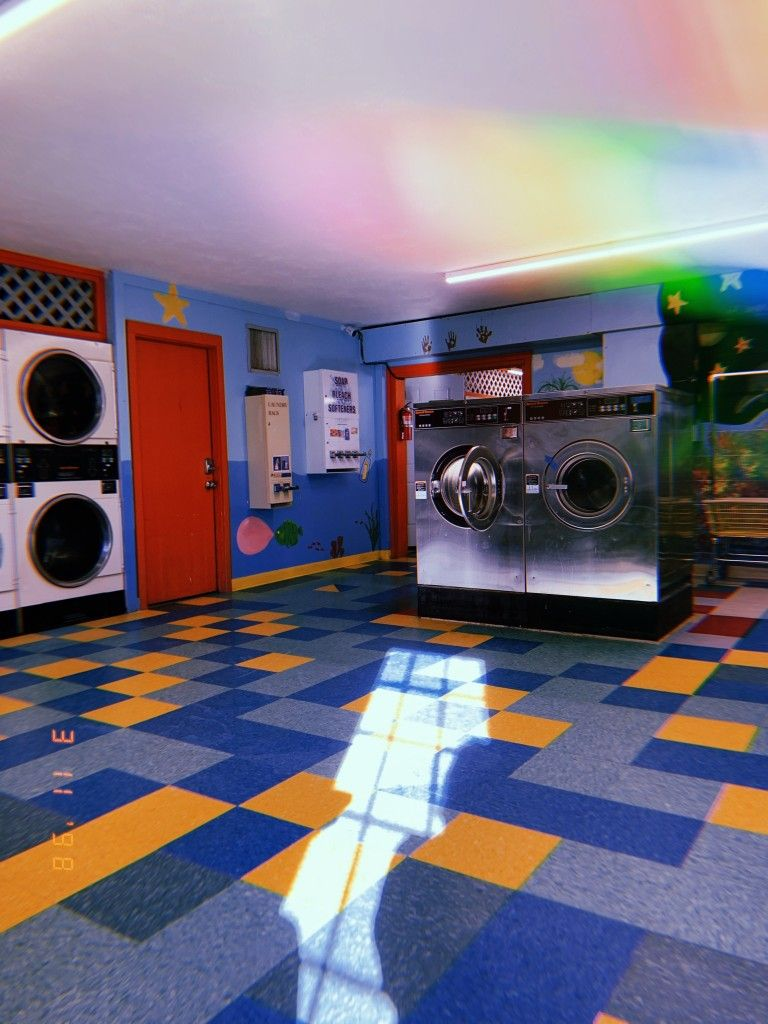
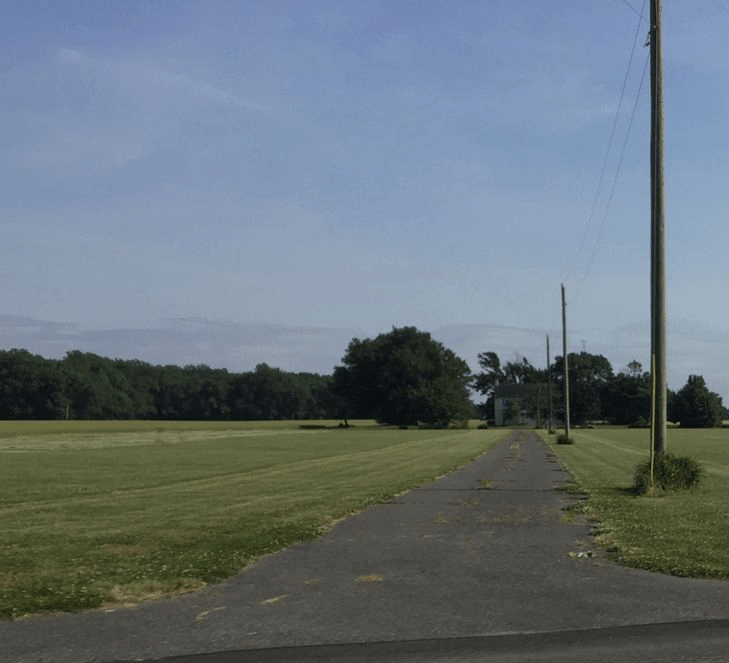
Above are a few images of liminal spaces. These really appeal to me because of their aforementioned nostalgic and dreamlike vibes, which I am personally very big on.
Primary Research
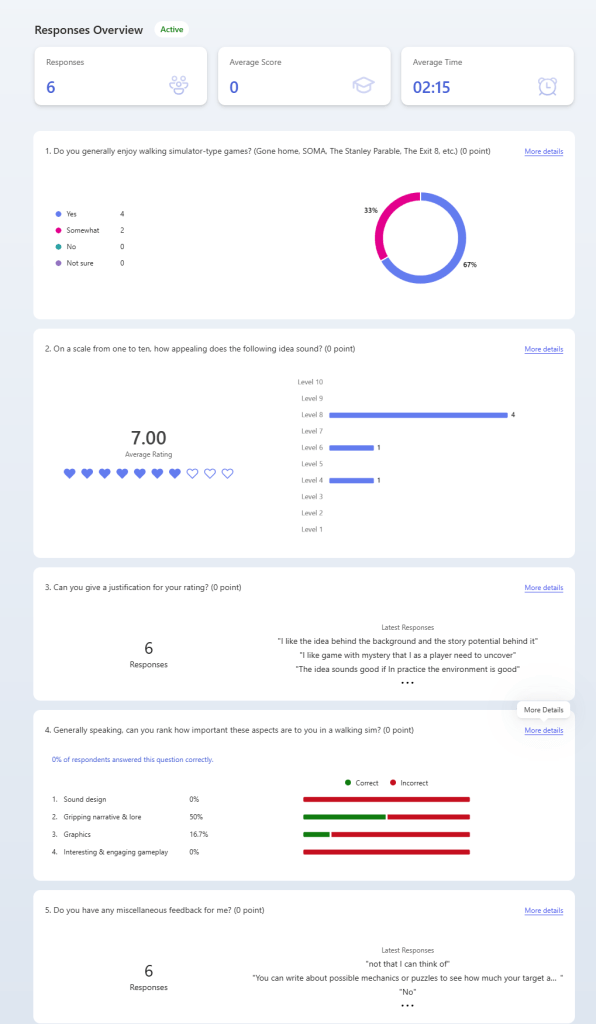
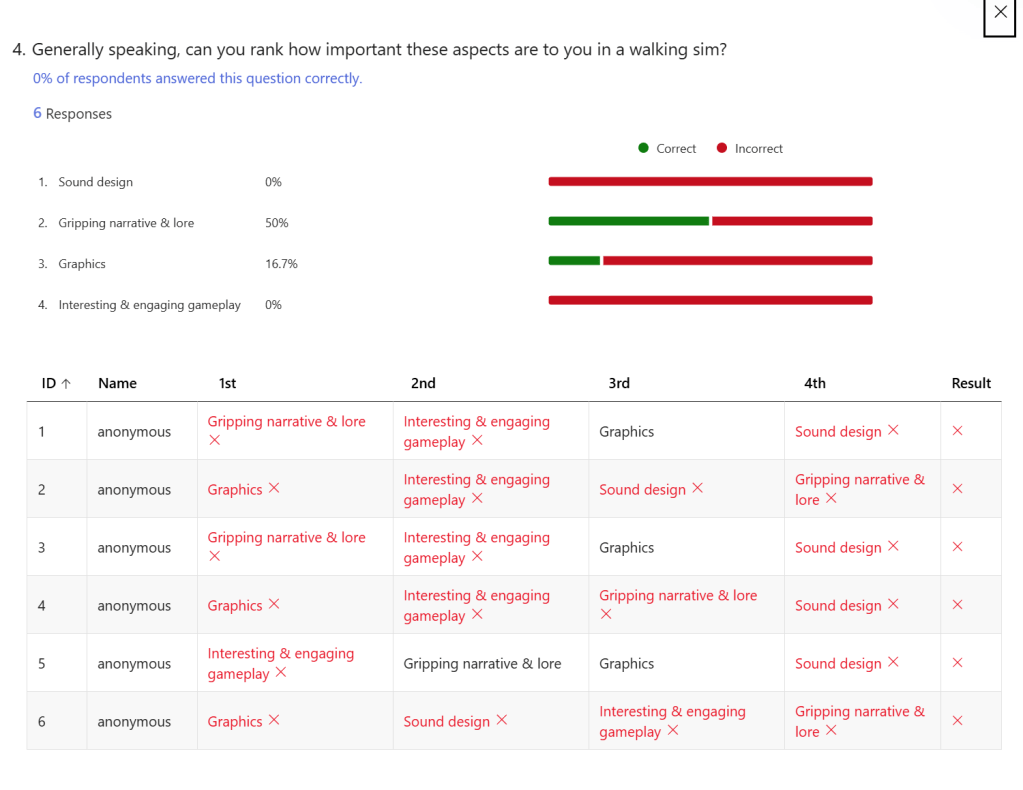
The above images showcase the response I got from my game pitch form. Putting aside that, for some reason, the questions were formatted in a right/wrong format, the response to question 4 in particular was interesting. My ranking would probably look something like this: Narrative -> Gameplay -> Sound design -> Graphics (Most important to least important). Funnily enough, three of the participants put graphics as their most important aspect, and nobody put it as their least important.
As four of the participants put sound design last in importance, I might need to focus a bit less on that in my final game. Not that it was ever a major focus, as I just wanted some ambient sound effects, which I am still planning on doing.
Across the board, however, good gameplay seems to be a focus for everyone. As gameplay goes hand-in-hand with other aspects, it shouldn’t be too hard to incorporate some interesting gameplay in my final game. I might end up doing a puzzle or two!
In terms of narrative, this can also be incorporated into the game naturally using item descriptions and context clues.
Platforms and hardware
Project Humanity is going to be developed using Unreal Engine 5. Ergo, by default, it is going to be very resource intensive. Despite the fact I have next to zero experience with Unreal Engine’s built-in tools for mitigating performance hiccups, I want to at least try some of them, so Project Humanity might have a better chance of running on lower-end hardware.
Unreal is notorious for not running overly-great on consoles. Especially last-gen systems, as one would naturally imagine. If Project Humanity were to get ported to consoles, I likely would not bother with last-gen versions.
Fortnite, specifically the Nintendo Switch 1 version, is notorious for being an absolute mess of a port. It’s gotten to the point that I am surprised it hasn’t been shut down yet. I’m not saying this to come off as horrible towards anyone or anything, I just want to use it as a good (yet admittedly extreme) example of Unreal Engine 5 running poorly on last-gen hardware.
There are plenty of YouTube videos showcasing this. Here are a couple of good ones I have found;
Project Humanity is planned to release on Steam, Epic Games and GOG. Ports for PlayStation 5, Xbox Series family and Nintendo Switch 2 will be considered dependant on audience interest.
Social media and marketing
Project Humanity will mainly be advertised on a platform such as YouTube. A Discord community based on Project Humanity and my other projects will also be considered once I feel like I have enough audience interest.
When it comes down to other platforms, I’m hesitant to advertise on some of them. Some of these include Twitter, TikTok, Twitch and Instagram. This is mostly to do with the toxic culture that those platforms encourage and represent. The thing is, these are major social media platforms with millions of users, so I may have to reconsider this stance.
I could limit interaction on certain platforms by disabling comments on posts. It’s a difficult situation, as I want to encourage community engagement and interaction. However, as mentioned, a lot of these platforms somewhat encourage toxicity and negativity, which I don’t want wherever possible.
I think the best course of action would to have a Twitter, Instagram, YouTube and Discord centred around Project Humanity and any other related projects. These will have strict moderation, wherever applicable. For example, Twitter does not allow you to delete replies to ones tweet. The best way of dealing with potential bad actors is to block, in my opinion. There is also the “hide” feature. However, this option doesn’t really work all that well, as it adds a button to the tweet where all the hidden replies can be seen instantly.
With regards to how to sell Project Humanity, a common trend with successful walking simulators is engaging stories and atmosphere. Often revolving around horror or dark topics. SOMA, Exit 8, Gone Home, The Vanishing of Ethan Carter, Firewatch and What remains of Edith Finch are all good examples of this.
I will implement this into Project Humanity via the use of various different aspects.
- Oppressive atmosphere
- Architecture
- Sound design
- Lore
- Dark subject matter
Research conclusion
From what I have conducted my research on, I feel like I have a strong starting point for planning and production.
 Dylan Brant